
Durga Sreenivasan
|
September 5, 2026
|
10
min read
Plastic is key to food packaging. Who should bear its responsibility?
Even a miracle material like plastic comes at a cost. It's time consumers and producers split the bill fairly
Read More

India’s natural resources are vanishing at an alarming rate. Over the last few decades, a third of the country’s wetlands have disappeared, and grasslands have seen similar losses in just ten years. In the face of little to no government intervention, local communities have stepped up to protect their land and livelihoods.
One such effort is Kalpavalli, a 3,000-acre grassland in Andhra Pradesh. Once barren, this land has been restored through collective action—proving how much can be achieved when people unite to care for nature. In Kalpavalli’s open plains, sunlight pours down unbroken by day. By night, moonlight turns the landscape silver.
The bush camp is remote, with no electricity or mobile networks. As we sit around a bonfire, Chiranjeevi, coordinator of Timbaktu Collective’s Kalpavalli programme, lets us into the story behind the landscape. Thirty years ago, the land was lifeless and forgotten. When CK Bablu Ganguly and Mary Vattamattam, the founders of the Timbaktu Collective, arrived, they were met with scepticism. Tall and lean, Ganguly didn’t fit the local mould, and villagers doubted his intentions. But he and Mary stayed on, building trust by visiting farms, sharing meals, and listening to the community’s concerns.
By 1992, their efforts began to bear fruit. Ganguly established Vana Samrakshana (forest conservation), a group devoted to the restoration of 125 acres of degraded land. Grass began to grow again, and soon enough, the shepherds returned with their sheep. Nine kilometres away, in Shapuram, shepherds brought their animals to graze on the recovering grasslands. But this led to conflicts. Nearby, in Mustikovila, villagers claimed the land as theirs. They had already formed the White Swan Conservation Committee in 1985 to protect grasslands.
“Last year, 82,000 livestock grazed here,” Chiranjeevi says. “In 2022, the figure rose to 100,000.” In a region where rainfall is erratic, the survival of both, shepherding and farming, hinges on the health of the land and the whims of the weather.
By 1995, other villages started to follow Kalpavalli’s lead; three more formed groups to protect their shared land. Together, they built a system that benefits everyone. As Chiranjeevi puts it, this isn’t just about the land; it’s about life–for the soil, the grass, the animals, and for people, too.

Kalpavalli has come a long way. Today, it works with 11 villages, each with its own forest conservation group. When the project started, there were barely any trees–no shade, no forests, just a few scattered trees and patches of grass. Now, after years of hard work, Kalpavalli is home to 400 types of plants, 130 bird species, and 22 mammals.
The project is run by a cooperative with 15 directors who meet every month to plan the next steps. Their main goal is to raise awareness about the local environment. They run programmes in schools to teach children about conservation and train adults to see how protecting the land can benefit their lives.
In 2015, they set up a bush camp to support their mission. It brings in income and serves as a mobile learning centre. Each year, more than 1,000 children visit to learn about the plants and wildlife that now thrive in Kalpavalli.

The story of Kalpavalli is one of hope and resilience, but it hasn’t been without its struggles. Climate change and the pressures of development remain. Moreover, the watchers safeguarding the 3,500 acres of rare grassland earn no money for their efforts. There’s no direct reward—no payments for patrolling the area or ensuring its safety. What drives them is their trust in the Timbaktu Collective, a group that has supported these communities for decades. The watchers’ work involves ensuring trees aren’t felled, gathering seeds for planting, and meticulously tracking the number of grazing animals. These records, in turn, serve as a vital health check for the ecosystem.
In 2011, Kalpavalli faced one of its biggest challenges: the arrival of windmills. For years, the area had no roads. It was so remote that Bablu and Mary had to park their car five km away and walk the rest of the way. The windmills brought with them roads, but at a cost. Trees were cut, wildlife was disturbed, and hills were dug up, causing soil to wash into downstream tanks, silting them up.

The villagers decided to act. Backed by the Kalpavalli Cooperative and the Timbaktu Collective, they took their case to the National Green Tribunal (NGT) and won. A Rs 50 lakh compensation was promised, but as the land is officially common property, the funds went to the Forest Department and were spent elsewhere. Still, the victory ensured no windmills could be built inside the conservation area again. Now, they stand on the fringes of the grassland.
Meanwhile, land prices in the region have been climbing steadily, tempting some to claim pieces of the precious grassland as their own. But Kalpavalli, a rare savanna grassland, stands protected—not by fences or laws, but rather the villagers who call it home.
Kalpavalli is not just a beautiful place. The rare savanna grassland is home to species that are disappearing in other areas. For example, the critically endangered Indian grey wolf has been spotted here–a group of seven at one time. Sloth bears and leopards also roam these lands.
What truly sets Kalpavalli apart is its model of care. The community owns and manages the grassland, with the Collective providing organisational support and training. Everything else—preservation, monitoring, and repair—is carried out by the people themselves.

Beyond sheltering wildlife, Kalpavalli supports nearby villages in critical ways. The grassland absorbs and stores rainwater, feeding seven downstream tanks. These tanks are lifelines for farming and daily life. When the grassland thrives, water levels rise, securing livelihoods.
But the balance is delicate. In 2023, a harsh drought left just enough water for the grass to survive. This followed three years of good rainfall, which had allowed the ecosystem to recover. Another hurdle is fires during the dry season, but villagers worked together to create firelines and extinguish flames before they spread.
Kalpavalli’s story is one of resilience. Droughts, fires, and encroachment are constant threats, but the community’s dedication proves that grasslands are far from wastelands. They’re vital biomes, as crucial as forests and wetlands.


In 2018, Dixit Kundar, a young resident of the Udupi district in Karnataka, paid a huge price for a game of barefoot football in rainy July. The only son of his parents Jai and Pathima, he was admitted to Manipal’s Kasturba Medical Hospital with complaints of high fever, severe headaches, repeated vomiting and trouble with closing his eyes while asleep. Despite medical interventions, his condition worsened as the days passed.
A week after being hospitalised, he succumbed to Melioidosis—a condition that was considered rare at the time. The news sent shockwaves through the public and medical fraternity. Following Kundar’s death, health officials were alarmed by the widespread presence of the causative bacterium, Burkholderia pseudomallei, in the soil, water, and environment of tropical, coastal, and monsoon-prone regions in India.
The bacterium is transmitted through inhalation, small cuts, or ingestion of contaminated water. Kundar had played football in flooded areas near his home, and it is suspected that he may have fallen into a waterlogged field during the game, thus exposing him to the disease.
A 2016 report estimated over 50,000 people contract Melioidosis annually in India, with more than 30,000 deaths. “India was predicted to have the highest burden for the disease (20,000- 52,000 new cases/year with an estimated mortality of 32,000 per year),” reads a 2019 bulletin from the National Centre for Disease Control. Troublingly, over 90% of the total cases in the country have been reported in the last ten years, even as academics predict that since 2005, the incidence of the disease has been underreported owing to misdiagnosis. Globally, the disease affects around 160,000 people each year, causing approximately 89,000 deaths.

Microbiologists believe Burkholderia pseudomallei has been prevalent in India for over a century; it was first described in Myanmar’s Yangon in 1911. “Dixit's death brought attention to a deadly infectious disease that the medical fraternity has issued warnings about since 2005,” says Prof Chiranjay Mukhopadhyay, Director of the Manipal Institute of Virology, who identified the first cluster of cases in 2007.
“It invades cells and destroys them. The infection can be particularly fatal for individuals with diabetes and chronic kidney disease. If left undiagnosed and untreated, patients may succumb within 48 to 72 hours,” Mukhopadhyay adds.
Understanding how India’s geography influences the spread of Melioidosis is critical for developing region-specific prevention strategies.
Fearing an outbreak, a team led by Mukhopadhyay visited every household in Udupi to assess the situation. They collected soil samples, tested drinking water sources, and disinfected stagnant water bodies with bleaching powder, in collaboration with district health authorities. They also urged residents to keep their homes, gardens, and cattle stables clean, as well as advising them to wear shoes when working with soil and water.

Those who work on farms, or even engage in recreational activities in waterlogged areas, are at a higher risk of contracting Melioidosis, warn medical experts. Gardening without gloves, walking barefoot, and consuming contaminated water also increase the risk of infection.
The disease can appear in a manner similar to pneumonia, septicemia, or acute bone and joint infections during the rainy season. In contrast, in the dry season, patients often present with multiple abscesses and skin ulcers.
For years, microbiologists struggled to diagnose Melioidosis due to symptoms that resemble those of common infections such as malaria, tuberculosis, dengue and the flu. This often led to misdiagnoses and delayed treatment. “A delay in identifying the disease can be fatal, as the infection requires specific antibiotic treatment,” Mukhopadhyay explains.

That Melioidosis can remain dormant in the body for years, resurfacing only when the immune system weakens, only adds to the concerns surrounding its diagnosis. “This characteristic makes it a ‘silent killer’ that can strike without warning. The disease can lie undetected for long periods, posing a persistent and hidden threat,” he said.
India's tropical, coastal, and monsoon-affected regions provide ideal conditions for the growth and spread of Burkholderia pseudomallei. While cooler, arid, and high-altitude areas face a lower risk, factors such as flooding, irrigation, and poor sanitation still pose significant threats.
Scientists have found connections between climate change and the spread of Melioidosis—including rising temperatures and more extreme weather events; Burkholderia pseudomallei thrives in warm, humid environments. Higher temperatures and lingering moisture create the perfect habitat for the bacteria in soil. As rainfall and flooding increase, the bacteria migrates from soil to water sources, broadening its spread.

Human intervention, in the form of deforestation, urbanisation, and changes in agricultural practices, also contribute to the spread of the disease. Soil disturbances during the rainy season, combined with strong winds, can release the bacteria into the air, raising the risk of inhalation and infection.
Climate change-induced extreme weather events, such as cyclones and droughts, can significantly alter the dynamics of Burkholderia pseudomallei in the environment. Cyclones bring heavy rainfall and soil erosion, while droughts concentrate the bacterium in soil and water, increasing its virulence during subsequent periods of rainfall. “Understanding how India’s geography influences the spread of Melioidosis is critical for developing region-specific prevention strategies. On the climate change front, raising awareness, improving surveillance, and adopting sustainable practices are essential measures to combat the threats posed by Melioidosis,” Mukhopadhyay says.
To combat the disease's spread, the Indian Council of Medical Research (ICMR) launched MISSION: A Multi-Centric Capacity Building Initiative to Strengthen the Clinical and Laboratory Detection of Melioidosis in 2022. The project involves 15 medical centres across 14 states, including Arunachal Pradesh, Assam, Sikkim, Tripura, Manipur, Meghalaya, Mizoram, Nagaland, Karnataka, Kerala, Madhya Pradesh, New Delhi, Odisha and Rajasthan. The initiative aims to raise awareness about Melioidosis and improve early detection and treatment protocols.

Kasturba Medical College (KMC) in Manipal, a leader in Melioidosis research for the past two decades, serves as the referral centre for the project. The Centre for Emerging and Tropical Diseases (CETD) has developed comprehensive training protocols for healthcare staff, equipping doctors and technicians with the tools needed to diagnose and treat the disease effectively. “Accurate diagnosis is critical for the successful treatment of Melioidosis. This capacity-building initiative aims to empower healthcare facilities across India to identify and manage the disease more efficiently,” Mukhopadhyay informs.
Early diagnosis is essential for effective treatment. “If the diagnosis is delayed, doctors may administer broad-spectrum antibiotics indiscriminately, potentially leading to antimicrobial resistance. This makes proper treatment increasingly difficult. Early and accurate diagnosis is, therefore, vital,” the veteran microbiologist explains.
Greater awareness can be raised if Melioidosis were classified as a notifiable disease, as well as recognised as a neglected tropical disease, he adds. This recognition will increase public awareness and help experts to attract funding and conduct research to combat it. “With the rising number of cases, particularly in tropical regions, we must invest in understanding the disease and developing effective treatments. By categorising it as a notifiable and neglected tropical disease, we can ensure the necessary resources are allocated to combat it, ultimately reducing its impact on affected populations,” he concludes.
{{quiz}}

When Raghu Nair (name changed upon request) underwent chemotherapy at Kochi’s Aster Medcity Hospital, his doctor recommended that more protein be added to his diet. “It’s good to have microgreens,” the doctor said to Raghu’s son, Mahesh.
On the lookout for sources of protein, Mahesh turned to Ajay Gopinath for advice. The banker-turned-microgreen enthusiast and farmer recommended a mix of beetroot, bok choy, and sunflower seedlings for a balanced intake. But he also warned the duo: "Don’t go over 25 gm a day," he said, "It’s important that your father’s body should actually be able to absorb the protein."
For three months, Raghu regularly consumed the microgreens, and the results were remarkable—his protein levels increased to the extent that the doctor advised taking the seedlings out of his diet for a while. “It was a confirmation of the tremendous benefits of microgreens,” said Ajay.

In 2006, over the course of a lunch at a Bengaluru restaurant, Ajay Gopinath’s life took a turn. When the paneer dish he had ordered arrived, he noticed an unusual garnish: triangularly arranged leaves. They didn’t look like the usual curry or coriander leaves he was familiar with. Curious, Ajay tasted them and found their flavour unique. When he quizzed the chef, he learnt they were mustard microgreens delivered by some vendor to the restaurant. That’s all the chef knew.
At the time, Ajay led the credit cards and personal loans division at Citi Bank’s Bengaluru outpost. Fourteen years into his corporate career, he was successful but stretched thin. While he liked the job, the 24x7 grind left little time for his family or himself. In 2007, he decided to quit. “It was an impulsive decision,” he said, “I also wanted to get out of my comfort zone.” Now back in Kochi with his wife—a lawyer—and their two children, Ajay took a break from work, prioritising leisure, travel and catching up with friends. In 2012, he switched to a marketing role at a dental implants company.
Soon after, what had begun as curiosity about a garnish would turn into Ajay’s new purpose. His work with microgreens has changed lives—just like it did for Raghu.
It was on a 2017 morning that Ajay woke up with an idea: why not start a business in microgreens? When he spoke to chefs in Kochi, they mentioned sourcing their supply from Bengaluru, as the seedlings weren’t available in local shops or supermarkets. This prompted Ajay to begin growing them himself. At first, he began small—with a single two ft by one ft tray, which produced 500 gm, a generous quantity that far exceeded the amount his family could eat. Since microgreens are highly perishable, he began sharing the extras with friends, relatives, and neighbours. “The taste was different but everybody, including my family, liked it,” he said.
His friends recommended that it was time to stop giving them out for free and begin selling them instead. Ajay heeded their advice, and by December 2020, he had launched Grow Greens, expanding his production by adding more trays. He also adopted a method involving cocopeat, a natural medium made from coconut husks. The seeds are placed on the cocopeat, and the prepared trays are kept in darkness for three days for germination. After that, they’re placed under 20-watt white LED tube lights for 10-12 hours daily. Ajay waters them once or twice a day and ensures the room stays below 25°C, with humidity under 60%.
Also read: A fisherman's inspiring fight to save Kerala's coast
Today, Ajay grows 60 trays of microgreens in an 80 sq ft room. His crops include radish, mustard, bok choy, sunflower, kohlrabi and yellow American microgreens, and works with around 25 different varieties. He sources seeds from countries like the UK, the US, Australia, Italy and Israel. “The prices range from Rs 600 per kg to Rs 1 lakh,” said Ajay. While the seeds have a shelf life of six to eight months, Ajay ensures they are used within three months.
To find high-quality seeds in India, Ajay has travelled to Delhi, Ranikhet, and Nainital. He also visited the GB Pant University of Agriculture and Technology in Uttarakhand, which specialises in nurturing seeds without using inorganic fertilisers, pesticides or genetically modified strains.
“Many people lack sodium, and microgreens help to balance it. They’re rich in protein, magnesium, and a mix of macro and micronutrients. What more do we need?” said Ajay, speaking excitedly about the many benefits of these seedlings. Aside from restoring calcium levels, they’re also known to be good for the eyes and skin. However, people who take blood-thinning medications should consult a doctor before consuming them. “Blood thinners regulate Vitamin K levels,” Ajay explained, “Microgreens can increase the levels of this vitamin in the body.” For such patients, low-Vitamin K options, such as beetroot microgreens, are a safer choice.
Priced between Rs 150 and Rs 250 per 100 gm, microgreens should be consumed within seven days. The best way to eat them is raw, or added to salads. Grow Greens supplies its produce to individuals, shops, hotels, gyms, hospitals, supermarkets, and schools, delivering 5 to 8 kg daily. Since Ajay’s venture is located indoors, it isn’t affected by weather changes. “I can grow them 365 days a year,” he said.
Many people lack sodium, and microgreens help to balance it. They’re rich in protein, magnesium, and a mix of macro and micronutrients. What more do we need?
He speaks about the shift from working in a bank to running a business with great clarity. “The salary I used to earn is now what I pay my five-member staff,” he said. To him, it is not merely about profit and loss. “When I started, it was a passion for me to see how the seeds grew,” he said, “I also believe these are natural plants, and therefore, good for human beings. We can address malnutrition issues with them. So, there is a social commitment.”
Ajay believes plants communicate in their own way. “If the water is less, or the plant needs more light, its leaves might droop,” he said, “And if we forget to switch off the light, the next morning its leaves will look tired. Through experience, I’ve learned to notice these signs.”
{{quiz}}
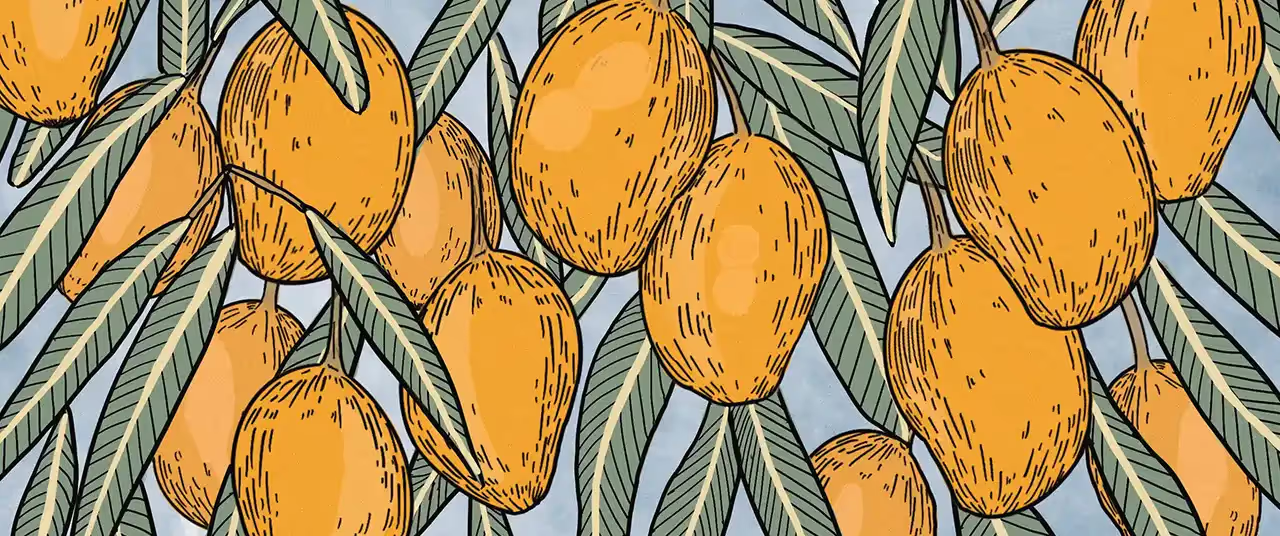
About three kilometres from the Gir forest in Gujarat, in a village called Bhalchhel, lies a 12-acre farm where the Jhariya family grows over 300 types of mangoes. This "live mango museum" is the fruit of three generations' labour. Among the varieties that can be found here are Rajwadi mangoes such as the dudhpedo, with its whitish-yellow pulp, and the kohitur—so delicate, it must be rested on a bed of cotton instead of a table. There's also the sonpari, a relative of the Alphonso, and 14 baramasi types that bear fruit multiple times a year.
Some mangoes are sweet and sour, others are intensely sweet, and there are also low-sugar varieties. The Jhariya farm features red mangoes, giant ones weighing up to five kilos, apple-shaped mangoes, banana-shaped mangoes, and even mangoes that taste like guavas, pineapples, or ones that have a hint of lemonade.

The story of this museum took root in the early 1980s, when patriarch Noor Ali Jhariya bought a piece of land and decided to grow mangoes, as they were popular in the area. Before his foray into the fruit, Noor Ali grew crops like peanut and wheat. In 1985, he planted trees largely of the Kesar variety, and there was no looking back.
Red soil, which allows for the quick spreading of roots and percolation of water, is preferred for the fruit. The Jhariyas’ first challenge was the earth itself: Their land is surrounded by mountains, with the village lying below. The Hiran river flows right beside the farm, and its rainwater often causes washouts. The black soil predominant in the area is known to hold moisture well, which makes roots vulnerable to infection. Mangoes are drought-tolerant, meaning they can grow even during dry spells, but too much water isn't good for them. To solve this, they farm on raised beds—about a foot high—so the soil drains naturally, and use drip irrigation to control how much water each plant receives.
In the early 1990s, Noor Ali's son Shamshuddin expanded the venture, establishing a mango nursery and a two-room farmhouse. He travelled across India, collecting varieties such as the langra from the north and the banganapalle from the south, and began cultivating exotic mangoes. In 1992, he acquired Sindhu, a high-pulp, thin-seed variety released by Maharashtra’s Dr Balasaheb Sawant Konkan Krishi Vidyapeeth. Over time, Shamshuddin sourced new varieties from institutions like the Indian Agricultural Research Institute in Delhi, the Central Institute for Subtropical Horticulture in Lucknow, and the Indian Institute of Horticultural Research in Bengaluru.

Also read: Inside one of India’s biggest mango markets
Sumeet, Shamshuddin’s son, built on this growing collection by travelling overseas; one of his destinations was Japan, which grows Miyazaki mangoes—fruits that sell for Rs 2.75 lakh per kilo, making them the most expensive mangoes worldwide. Although a medium-sweet variety, their demand stems from their sweet aroma, bright colour and the sustained fascination around their high price point. The country has built greenhouses to grow the fruit, since its climate is not ideal for mangoes. "Even if it's 0 degrees outside, the temperature inside [these greenhouses] is about 25 degrees," Sumeet explains. This drives up production costs. At the Jhariyas’ mango museum, the fruit is grown outdoors.
At the end of the day, it’s a mango. If the climate is suitable for one type, there’s a 99 per cent chance it will be suitable for the others too. We treat all varieties the same.
Much like India, Japan, too, holds auctions. When mango season begins in India, the first boxes of mangoes are sold at very high prices. Normally, a box of Kesar mangoes costs Rs 100-150 per kilo, but during auction weeks, it can go up to Rs 1,000-1,500 per kilo. "This boosts farmers’ morale, and the money goes towards good causes, such as donations for a cowshed," Sumeet says. The same phenomenon plays out in Japan, with the price reaching up to USD 3000 at initial auctions. A Miyazaki tree is now growing on the Jhariya family’s farm, which has around 4,500 trees.

Growing various varieties isn’t as complicated as it may seem. “At the end of the day, it’s a mango. If the climate is suitable for one type, there’s a 99 per cent chance it will be suitable for the others too. We treat all varieties the same,” the third-generation mango farmer says. Essentially, the only difference is the ripening time. For example, a mango variety native to the US normally ripens in November or December, but in India, it ripens in June or July. The underlying logic is that the plant needs cold weather and water stress (periods when the supply of water dips below the demand for it) to flower. In India, this happens around December or January. Then, the plant needs heat for the flower to turn into fruit; it is this heat that makes the mango go from sour to sweet, and in India, this happens around April or May. "It simply adjusts to the climate where it is growing," he explains.
High-density farming, a newer approach to mango production in India, is widely applied across the Jhariyas’ farm. Normally, mango trees are planted 30-40 feet apart, and can grow as tall as 40 feet. In these orchards, yields start after 15 years. Under high-density farming’s principles, trees are planted 10-12 feet apart and begin producing in about 10 years. “The main thing is pruning. We cut off the top after the mango season. We harvest the produce and reduce the branches,” Sumeet says. This method results in not just better-quality fruit, but also improved quantities. While a traditional Kesar mango orchard produces six to 12 tonnes per hectare, high-density farming can yield up to 20 times that, and at an earlier age. “This is perfect for India because farmers here have smaller land holdings, allowing them to maximise earnings,” he adds.

Also read: The tell-tale apple trees of Thanamir
Mango farming presents several challenges, one of which is that a tree can produce fruit quite different from the parent tree in taste, keeping quality, and yield. This happens because mango trees have both male and female flowers, meaning the offspring can be completely different from the tree that produced them. To solve this problem, farmers use grafts, which create a clone of the original tree.
Grafting calls for two essentials: first, a good quality wild mango seed, because wild seeds are naturally suited to the local climate and have good disease resistance. After about four to eight months, when the plant is approximately three feet tall, its top is cut off, creating what’s called the root stock. Second, a new branch from a tree that produces good fruit. These two branches are joined in a ‘V’ shape, called a scion. If the grafting is successful, new leaves will appear within a month. If it dries up, the graft has failed. “With commercial varieties we get an 80 per cent success rate. And with exotic varieties it’s a 20-30 per cent success rate. But when it does succeed, the fruit of the scion is of the same quality as the parent plant,” Sumeet says.
%2520copy.avif)
A farm like the Jhariyas is a long-term investment. When buying new varieties, they begin by investing in the initial plant. It can take up to three to four years before the plant bears fruit—a sign that it is genuine (or not). Then, they have to wait 3-4 years before the plant starts to bear fruit. If a plant fruits too early, it’s best to cut it off, so that it is encouraged to grow stronger. After this laborious wait, even if they harvest good-quality fruit, selling it can be tough if consumer awareness is lacking. “These exotic varieties go for double the price. But there’s no demand for them; everyone just wants local varieties,” Sumeet explains, adding that he hopes to combat this issue through this YouTube channel.
Despite these challenges, the Jhariya family runs a successful mango “museum”, driven forward by innovative solutions. Today, their income comes from fruit sales, plants sold via their nursery, and an agritourism homestay; what began as a two-room farmhouse has grown into a 30-room resort. In their success lies the promise of richer mango offerings for their dedicated customer base.
{{quiz}}

Nagaland’s remote villages are a world few know. Hidden in the lush, green folds of India’s northeastern corner, these places remain largely unexplored. The landscapes are captivating, rich with culture, yet often hard to access. Without the burden of mass tourism, it’s nearly impossible to find a guide online to navigate these wild, untamed lands.
After Thanamir in Kiphire District, the Good Food Movement team ventured towards another pristine, nearly forgotten village in this wild eastern expanse. Salomi, located less than 20 kilometres from Nagaland’s apple capital, is the most populous village in the district. Yet it’s largely overlooked, known only for its limestone caves.
Travelling through Nagaland is no easy feat. The state’s roads are infamous for their ruggedness, winding through terrain that remains untouched by industry. Situated between Assam and Manipur, the region has a history of conflict, dating back to the 1800s when the British sought a direct route to expand their tea trade. Today, the state is home to 407 documented Community Conserved Areas (CCA), including Salomi.

Without private schools in the area, a government senior secondary school is teaching students about sustainability. The students are focusing on a skill often missing from standard curriculums: growing their own food. The school offers well-maintained classrooms for lessons and two extra rooms for non-academic activities, but it lacks computers for teaching purposes.
The village council, alongside the student union, has embarked on an ambitious conservation effort, inspired by local environmental programmes and the work of NGOs in the region. The initiative is part of a larger wave of community-led conservation across Nagaland, particularly in Kiphire–an area bordering Myanmar that has some of the state’s most pristine forests.
Here, the students are more than just learners; they are the village’s stewards of conservation. They’re not only tasked with preserving the environment, but also with cultivating the food their community consumes. Meanwhile, the village council plays a more hands-on role, guiding the decision-making process and ensuring the success of the conservation efforts. Every winter, the council and the student union come together for their annual meeting, reflecting on past efforts, addressing challenges, and setting new goals for the year ahead.

As part of the Samagra Shiksha programme, Ningtithong Yimchunger has joined the government school to teach children about farming, with a focus on organic practices. During a meeting with village elders, he asked for organic seeds to take the lessons further and give the students practical experience in organic farming. His request was approved, and now the students are learning to grow crops in the Kharif, Rabi, and Zarif seasons, combining both theory and practice.

Initially, the idea of a kitchen garden was unfamiliar to the villagers. However, over time, they gradually adopted the tools and techniques of farming, growing crops in their own backyards. Today, those who once knew nothing of soil or spades proudly call themselves farmers. They now rely solely on homegrown produce, turning what was once a foreign concept into a symbol of pride and self-sufficiency.
In Salomi, the school plays a crucial role in teaching young minds the essentials of local botany, the rhythms of cropping seasons, and the skills necessary to grow food right at home. Children are not only introduced to the basics of farming, but also to the value of manure and the various ways it can be sourced and used to enrich the soil.
“I find deep satisfaction in farming because it brings me a sense of security about what I can harvest and eat each month,” says Alum, a resident of Salomi. Before the CCA was established, Alum never imagined herself as a farmer. Now, each year, she starts by sowing maize in February, followed by her favourite crops–kidney beans and cabbage.

Like Alum, other residents also believe that NGO involvement is crucial for scientifically exploring their forests and resources. They stress the importance of organising seminars and educational programs at the village level to encourage biodiversity conservation. Additionally, they highlight the need for financial and livelihood support to sustain conservation efforts in the area.
In Nagaland, communities fiercely uphold their customary laws, which can vary dramatically from tribe to tribe, and even from one village to another. At the heart of this governance lies the village council, the highest authority in decision-making. This council is composed of gaon burrahs (village elders) and elected members, all guided by an appointed chairman. Historically, women have had little to no role in these councils or in broader decision-making processes within Naga society. However, in recent years, a quiet but powerful shift has taken place. Women in Nagaland and surrounding regions are stepping into leadership roles, creating bridges between the fields and kitchens, and challenging centuries-old societal norms.
In the villages, farming takes many forms–some work in backyards, while others manage larger plots of land. What unites them is their active involvement in forging a deeper connection between what they grow, eat, and protect. The people of Nagaland are increasingly realising the link between the food they cultivate, and the stewardship required to sustain it, much like Alum.
(Image Credits: Imtiakang Imsong)

Khejri (Prosopis cineraria), known as the Kalpavriksha or tree of life in Rajasthan, has been a cornerstone of the desert ecosystem for centuries. It provides nutrition, livelihoods, and environmental stability to the region's people.
The tree covers two-thirds of Rajasthan's geographical area and thrives in extreme conditions. Its deep roots tap into underground water reserves, making it a vital lifeline in a region with minimal rainfall. “This tree is more than a survivor; it is a provider,” says Sriram Bishnoi, standing under its shade on a sunny afternoon.
Bishnoi says the tree’s pods, called Sangri, are a protein-rich dietary staple. They are a key ingredient in traditional Rajasthani dishes like Ker Sangri, Panchkuta, and Kadhi. Its leaves feed livestock, and its wood serves as fuel for households.
“Sangri embody the resilience of desert communities,” says Gajjer Singh, a farmer and shop owner from Jheepasani village. "They have sustained us for generations, not just by filling our stomachs but by fortifying our health," Singh adds.

Traditional Rajasthani cuisine is renowned for its bold, vibrant flavours, yet its true essence lies in its deep connection to local farming practices and its exceptional nutritional value. One of the region's most cherished dishes, Panchkuta Ki Sabzi, made with Sangri as a key ingredient, embodies this connection.

“Panchkuta offers limitless health benefits as it’s made from the seeds of Kumat, fruits of Ker and Khejri, Khachri, and Goonda. All of these ingredients are organic, grown without a single bag of fertiliser or pesticide,” says Singh.
The leaves of Khejri, locally known as loong or loom, are highly valued for their protein, fibre and carbohydrate content.
A study by researchers Natasha Yadav and Monjoy Kumar Choudhary found that Sangri pods are highly nutritious, containing 40–58% carbohydrates, 8–20% protein, 24–28% dietary fibre, 3.2–4.1% fat, and 5.4% ash.
The study also highlighted that Sangri are rich in micronutrients, providing calcium (0.33%), phosphorus (0.44%), and trace minerals such as iron (208–639 ppm), copper (13–16 ppm), manganese (22 ppm), and zinc (13–16 ppm).
In addition, Sangri have a high-quality amino acid profile, making them an important source of protein in arid regions.
Once a humble rural staple, Sangri has now become a sought-after delicacy at urban weddings, symbolising both its cultural and nutritional value.
In cities, eateries have begun featuring dishes like Panchkuta and Ker Sangri, both made from the pods of Khejri, on their premium menus. Despite their steep prices, these traditional dishes have garnered a new following, particularly among tourists. While dining at one of Jodhpur's upscale restaurants, Hritik, a tourist from Madhya Pradesh visiting Rajasthan, tried Ker Sangri for the first time. "I first heard about this dish from a Rajasthani friend, and I've wanted to try it ever since—I really enjoyed eating it," he says.
Other Sangri-based dishes, like Sangri Kadhi–a tangy, creamy preparation made with curd and mustard oil–as well as pickles, are also growing in popularity.

“These dishes are not only delicious but also packed with nutrition,” says Mahipal, a farmer from the Karwar village in Jodhpur, who has been consuming Khejri for years. “Our households have been enjoying it for generations,” he adds.
According to researchers Yadav and Choudhury, the pods have shown the presence of compounds such as linoleic acid, flavone derivatives, and polyphenols, which promote muscle health, enhance metabolic functions, and offer therapeutic benefits. The study also highlighted the tree's ecological contributions, including nitrogen fixation and soil enrichment, underscoring its importance in sustainable agriculture.
"Fodder for small ruminants has long been a challenge in Rajasthan's arid region, as crops are only grown during the rainy season. After the Kharif season ends, fodder shortages arise, prompting cattle rearers to turn to Khejri, as its leaf-fodder can be easily stored and used year-round," says Dr Dheeraj Singh, principal scientist and head of the integrated farming division at ICAR-Central Arid Zone Research Institute in Jodhpur. "The leaves of Khejri, locally known as loong or loom, are highly valued for their protein, fibre and carbohydrate content."
A study by scientists at Bikaner’s ICAR-Central Institute for Arid Horticulture has found that Khejri leaves contain 12 to 18% crude protein, 13 to 22% crude fibre, 43 to 45% carbohydrates, 2.9% fat, 0.4% phosphorus, 2.1% calcium, and 6 to 7% trace elements, with a calorific value of 5000 kcal.
“It is one of the most nourishing fodders for our goats. We depend on it greatly,” says Ram Dayal, a cattle rearer from Jheepasani village of Jodhpur.

Khejri trees take 10 to 12 years to grow and produce fruit. Their pods grow high on the tree, and the presence of thorns makes it difficult to harvest the fruit or collect the leaves for fodder.
To address these challenges, scientists at Bikaner’s ICAR-Central Institute for Arid Horticulture developed a hybrid variety called Thar Shobha. “It produces high-quality pods on shorter trees, making harvesting much easier for farmers. It also starts bearing fruit faster than traditional Khejri trees,” says Dr Singh.
This [Thar Shobha] variety yields more and is easier to harvest, being shorter than the traditional Khejri. On average, it produces 10 kilograms of Sangri, while the traditional variety yields a maximum of 7 to 8 kilograms.
In response to the threats posed by rapid urbanisation, the Gahari Foundation, a non-profit based in Rajasthan’s Jodhpur, is spearheading the Khejri Sahejo campaign to protect the Khejri tree. The foundation has established a nursery with over 100,000 Khejri plants in Miyasani village.

“With the deforestation of Khejri, we are working to protect this vital tree using the Thar Shobha variety developed by scientists,” says Baldev Gora, chairman of the Gahari Foundation. “This variety yields more and is easier to harvest, being shorter than the traditional Khejri. On average, it produces 10 kilograms of Sangri, while the traditional variety yields a maximum of 7 to 8 kilograms,” he adds.

Beyond its nutritional value, Sangri offers a wide range of medicinal benefits, too. The pods are rich in phytochemicals like tannins, flavonoids, alkaloids, and steroids, giving them antioxidant, antibacterial, anti-inflammatory, and antihyperglycemic properties. “Traditional medicine uses Sangri to treat gastrointestinal and respiratory ailments, skin diseases, and chronic conditions such as diabetes and rheumatism,” notes the study by Yadav and Choudhary.
It also points out that the tree’s bark and leaves have healing properties used to disinfect wounds, treat skin conditions, and address illnesses like leprosy and bronchitis.
Dr Singh also highlighted the significance Sangri has in traditional medicine. He explained that dried Sangri is used to relieve menstrual cramps, manage diabetes, treat coughs and skin disorders, and even address complications such as miscarriage. He described Sangri as a medicinal boon, noting that it not only enriches local diets but also supports the livelihoods of desert communities through its therapeutic properties.


Growing food is no easy feat. The elements–soil, water, air–must align perfectly with a plant’s needs; even minor deviations can be unforgiving. Understanding agriculture goes beyond mechanics; it requires an intimate knowledge of the land.
Farming knowledge can’t come from theory alone. Farmers need firsthand experience to address rising temperatures, erratic rains, and pest infestations. Organic farming, while often celebrated as a healthier and more sustainable approach, presents its own set of challenges. Each decision carries weight, and even a small misstep can result in hard, sometimes costly, lessons.
Despite these hurdles, many farmers are reimagining how we grow and distribute food, prioritising sustainability at every step. Organic methods are just one part of the equation. Another critical aspect is the role of middlemen–those who link farmers with consumers and shape market dynamics. While these intermediaries play a vital role, the current system often tilts the scales unfairly, leaving farmers at a disadvantage.
Addressing these imbalances requires systemic change, combining innovative farming practices with more equitable market structures.
Enter Bhoomi Farms. Founded by Shankar Venkataraman in 2015, they're committed to delivering chemical-free produce you can trust. His farming experience in the US showed him how middlemen's practices often meant organic farmers couldn't get fair prices for their crops. So he took a different path. Instead of following the usual chemical-heavy farming methods, he stepped back, rethought his approach, and brought in agronomists to understand how different farming practices affect the land.
The idea for the venture came from the difficulty of tracing where food in India really comes from. When Venkataraman’s six-month-old child fell seriously ill, he started researching how food is grown and its impact on health. He realised that poor soil health leads to food lacking in nutrients. If soil degradation continues, the global food system could be at risk.

Earth (or Bhoomi) is much more than just soil beneath our feet–it's a complex living system that's vital for life as we know it. This so-called ‘dirt’ transforms waste into nutrients, helps regulate our climate by managing carbon dioxide, and naturally purifies our air and water. But here's the thing: our soil is in trouble. With intensive farming, expanding cities and increasing concrete cover, we're putting immense pressure on this sophisticated system. Vital species are disappearing, putting this critical ecosystem at risk.
Venkataraman recognised the urgency of soil preservation early on. He assembled a team of agronomists–now a dozen strong–to prioritise soil health. In conventional farming, soil life suffers from harmful practices. Tillage, for instance, strips soil of organic matter, depletes moisture, and harms biodiversity. Pollution and heavy machinery add further strain.
Restoring soil health by eliminating chemicals and encouraging biodiversity is a long, demanding process. It tests patience and can make farmers second-guess their decisions. Venkataraman’s team helps farmers understand soil and crop needs, ensuring their land reaches its full potential. The payoff? High-quality, sustainable food and a healthier planet.
Bhoomi is putting years of hands-on experience to good use. They're taking everything they've learned about composting, natural farming inputs, crop rotation, mixed planting and proper bed preparation to help other farmers switch to organic methods. "We want to be a farming school," says Venkataraman, whose farm grows more than 100 different fruits and vegetables for people wanting fresh, local produce.
Drawing from his background as an engineer, Venkataraman focuses on four essential farming elements:

"Farming is very hard to make ends meet," says Venkataraman.
The climate crisis has made irregular rainfall a common problem. Just months ago, unexpected downpours at Bhoomi Farms in Thali, Tamil Nadu, destroyed crops worth Rs 30 lakhs. "I want to continue hoping despite the odds," he says. To protect against unpredictable weather and pests, the farm now uses greenhouses.

When Bhoomi first started, the team planned to build greenhouses across 200 acres. But with costs reaching Rs 130 crores and profits taking 10-15 years to materialise, this wasn't practical. So Venkataraman scaled down his plans.
Despite these challenges, he remains determined to adapt greenhouse techniques for smaller farms. “Farming is a process,” he says. “Bhoomi is a minimum 20-year journey.”
(Image Credits: Sandeep S, Sreejith M, Shreyas S)

Protecting the environment and biodiversity is essential for farming worldwide, but for Himalayan villages, it’s a lifeline. With their high altitudes, steep slopes, and close proximity to forests, these villages hold the key to preserving some of the richest biodiversity on Earth. Yet, this comes with a challenge: how can small, often fragmented plots of land sustain the nutrition needs of villagers engaged in hard manual labour?
One answer lies in safeguarding the region’s biodiversity, particularly traditional crops like millets. Why? Because agro-chemicals not only degrade the soil but also pollute the vital Himalayan water sources, such as springs and rivers, more rapidly than in other regions. On the flip side, good soil and water conservation practices here can ripple downstream, benefiting the plains far below.
These issues weren’t lost on Gandhian social activists in Henvalghati—a scenic valley of the Henval River, visible from the Rishikesh-Chamba Road in Uttarakhand. Decades ago, they launched the ‘Save the Seeds Movement’ (or Beej Bachao Andolan, BBA) to champion eco-friendly farming and preserve the diversity of traditional seeds.
Activists like Vijay Jardhari, Kunwar Prasun, Dhum Singh Negi, and Sudesha Devi, who had earlier fought to protect forests in the Chipko (hug the trees) Movement, extended their commitment to sustainable agriculture. They faced an uphill battle when officials began promoting soybean monoculture, dismissing the region’s traditional mixed farming as outdated.

What these officials failed to see was the brilliance of the local mixed farming system, known as barahanaza or “12 foods.” This ancient practice, often involving more than 12 crops, created a resilient, sustainable food system.
Each crop played a role:
This intricate balance wasn’t just about survival; it maximised nutrition and kept the soil fertile, season after season. The BBA activists promoted the benefits of barahanaza, using science to support their claims. Over time, their views gained wider acceptance and are now officially recognised.

In the fertile valleys, rice and wheat dominate. Yet, the shift toward Green Revolution varieties brought dependency on chemical fertilisers and pesticides. Participatory research by BBA activists, including women farmers–vital contributors to Himalayan agriculture–revealed an alternative.
Their studies highlighted that traditional rice varieties often matched or even outperformed the new ones, yielding more rice per kilogram of paddy. Farmers also noted a significant boost in fodder quality and quantity, critical for livestock.

But the impact went beyond numbers. Farmers found food made from traditional varieties tastier, more nourishing, and better for their stamina.
More villagers began recognising the core message of the Beej Bachao Andolan (BBA): the need for ecologically protective farming and preserving biodiversity. Volunteers rallied together, joining foot marches that carried this message from village to village. Along the way, valuable knowledge about traditional crop varieties was shared, and actual seed exchanges took place.
One of the longest marches stretched from Askot to Arakot, covering the breadth of Uttarakhand. Leading the way was Kunwar Prasun, a dedicated activist who walked the entire route, spreading awareness and inspiring action.
The foot marches uncovered a wealth of information about traditional crop varieties. In Jaunsar Bawar, villagers held their chwatu red rice (also called chardhan or chwaria) in high regard for its unique flavour. In Kairaro Valley, thapchini rice stood out for its high yield and good taste, while the barahai variety thrived with minimal water. The zeeri variety was prized for its exceptional flavour, and jhailda and khimanand ki ghori were resilient against hailstorms. For windstorm-prone areas, jarakhya proved to be a dependable choice.
In wheat, the mishri variety was celebrated for its rich taste and ability to withstand snowfall and limited sunlight. Meanwhile, the thang variety performed well in less fertile lands.
Operating without external funding, BBA worked tirelessly to preserve these seeds in fields and record their characteristics. Kunwar Prasun and Vijay Jardhari contributed to this effort by writing books in Hindi on these topics. Prasun also penned an essay documenting over 100 rice varieties from the region, detailing their unique traits.
Despite working without funding, BBA did its best to save seeds in the fields and document their efforts. Kunwar Prasun and Vijay Jardhari have written books in Hindi on these and related topics. Kunwar Prasun also wrote an essay that records over 100 varieties of rice from the region, highlighting their unique traits.
BBA’s work built on the earlier efforts of the Chipko movement in Henvalghati, which focused on protecting forests. Villagers from Henvalghati showed immense courage, saving forests in Advani and Salet from being cut down or auctioned to contractors. They also worked to restore degraded forests. These forests are crucial—they prevent soil erosion and landslides, provide fodder and leaf manure, support water springs and streams, and offer wild foods that improve food security for poorer families.
The villagers also stood up to mining contractors who wanted to extract limestone and other stones from the Henval river. If mining had continued, it would have caused landslides, damaged farms, and destroyed small irrigation channels (guls) that took generations of hard work to build. BBA activists extended their efforts to other villages like Nahin Kala, where mining posed an even greater threat. They helped protect farms and forests there from reckless mining.
A key insight from BBA was the significant role of women farmers. While they are central to Himalayan agriculture in normal times, their contributions become even more vital in protecting biodiversity, forests, and the environment. Women displayed exceptional responsiveness to these concerns, demonstrating their indispensable role in these efforts.
The lessons and achievements of BBA and similar movements offer valuable guidance for shaping Himalayan agriculture. They underscore the urgency of prioritising ecologically protective farming and preserving the region’s rich biodiversity.
{{quiz}}

There was a time when people relished healthy, delicious meals made from fresh produce harvested from naturally cultivated fields. However, as farmers adopted chemical fertilisers and pesticides, toxins began infiltrating the soil and food, often with little awareness of their harmful effects. Recognising the damage, many farmers are returning to natural methods, including Tarachand Belji, a pioneer of the natural farming movement from Bhopal. Guided by his principle, “Agriculture has to be sustainable, both in terms of boosting productivity and maintaining ecological harmony,” Belji has been promoting Tarachand Belji Techniques (TCBT) since 2009, following his experiments with soil health, fertilisers, pesticides, and water management.

In 2005, Tarachand’s search for better farming methods led him to Nana Ji Deshmukh, his mentor at the Krishi Vigyan Kendra in Ganiwa and Majhgawan under the Mahatma Gandhi Chitrakoot Gramodaya Vishwavidyalaya. He had seen the results of both conventional chemical farming, practiced by his father, and organic farming, which mainly used vermicompost and simple composting techniques. He noticed that chemical farming led to poor yields, unhealthy soil, and crop diseases, while organic farming had its own limitations. This led him to experiment with natural farming methods. During his trials, he connected with agricultural scientists from Kanpur, Banaras, and Deepak Sajde, who introduced him to ‘Panchmahabhut Krishi’.
Agriculture has to be sustainable, both in terms of boosting productivity and maintaining ecological harmony.
“TCBT is a philosophy that honours the land, fosters sustainability, and supports a regenerative agricultural system based on respect for nature,” he said. Under the guidance of members of the All-India Organic Forum Association, Tarachand studied 13 foundational texts, including ancient scriptures like Vrikshayurveda, Krishi Geeta, and Kashyapi Krishi, which reveal age-old wisdom on natural farming.
“In three years, I established multiple organic farming models in Zari, Bhatni, Khamariya, and Dhodar villages,” Tarachand said. Building on his knowledge of both chemical and organic farming, Tarachand founded the Prakritik Krishi Shodh Sansthan in 2009. He and 100 farmers cultivated a 13-acre plot in Kharmaria village, Narsinghpur district, where the fields were overrun with parthenium weed (gajar ghas). Combining ancient agricultural principles with modern challenges, Tarachand and his team conducted quarterly evaluations to track progress. The use of natural compounds, such as panchgavya (a mixture of cow-based ingredients) and ‘jeevanu jal’ (enhancing microbial activity), led to encouraging results.
“By 2022, our team achieved record-breaking yields across 18 crops. We harvested 1,000 gourds from a single plant and 15 quintals of mustard from just 50 grams of seeds. I cultivated wheat, rice, green peas, lentils, and guava,” he said.

“After adopting Panchmahabhut Krishi and achieving 20 to 30 percent higher harvests, I decided to create awareness to encourage farmers to try this healthy approach,” Tarachand said.
‘Agnihotra’ or puja is performed for the fields, and the ashes are sprayed wherever possible. Farmers use methods like ‘beejamritham’ to strengthen seeds, ‘jeevamritham’ to fertilise the soil, and mulching to shield bacteria from sunlight. Soil tests check humidity, pressure, biomes, beneficial bacteria, and pests, and rejuvenation is carried out when needed.
Also read: The fight to save India’s small rivers
“Panchmahabhut Krishi is all about aligning with the elements of nature–earth, water, fire, air, and space. It enriches the soil and nourishes crops with energy in harmony with nature,” said Siju Sivanand, an aviator turned farmer in Kollam, Kerala. He cultivates bananas, chillies, ginger, turmeric, yam, tapioca, lady’s fingers, greens like spinach, gourds, and fruits on his farm. “The soil naturally contains nitrogen, phosphorus, and other nutrients. Microbes protect plants. Just look at forests–natural methods are more than enough,” he said.
"Chemical farming, while initially productive, drains soil carbon, disrupts the microbiome, and relies on unsustainable practices," said Siju. "I noticed my soil was hard, and the yield was low. I consulted many experts, but only TCBT, recommended by my mentor, addressed all my concerns. TCBT has helped loosen and enrich the soil, boost productivity, and reduce pest problems. Previously, during rains, my ginger would rot due to waterlogging, but after using TCBT, there's better seepage, increased microbial activity, and improved results."Siju said, running his fingers through the fertile soil. "A small amount of natural fertilisers and pesticides is enough to cover large areas," he added.

With the launch of the National Mission on Natural Farming in November, 34 lakh farmers have adopted natural farming practices, covering 22 lakh hectares of land. The Centre now aims to involve one crore farmers in natural farming through institutions and grama panchayats.
Tarachand is on a mission to encourage more farmers to embrace organic farming. Having trained over 200,000 farmers in sustainable agriculture, he focuses on soil health, pest management, and eco-friendly techniques. His hands-on training programmes and talks empower farmers across Punjab, Gujarat, Rajasthan, Uttar Pradesh, and other states.
He has also played a role in shaping Madhya Pradesh's organic farming policy and frequently delivers awareness sessions at agricultural universities. "I was a trainer at GB Pant University of Agriculture and Technology in Pantnagar, Uttarakhand," he said. "Realising the need to go organic, I started reaching out to farmers in other states, helping them transition to toxin-free farming."
Tarachand's efforts earned him invitations to G20 sessions in Mumbai and Varanasi in 2023.
"Balancing the five elements helps curb pests, and the produce is healthier and tastier than those grown chemically," said Sumit Rana, a farmer in Punjab. "I discovered TCBT on YouTube and started practising it to ensure my family eats healthy, nutritious, and tasty food while treating nature kindly. I switched recently, and the results are promising," he added.
"I also came across TCBT on YouTube," said Vijay Barfa, a techie-turned farmer from Bhopal. "It’s a form of agriculture rooted in divine energy and ecological balance, and it works. As a large-scale farmer, I plan to transition to natural farming step by step."
TCBT is also promoted through Soul Society for Organic Farming Research and Education. “It’s a digital company comprising farmers, researchers, technologists, and trainers, with Tarachand Belji as cofounder, chief mentor, and ideologue, founded in October 2021,” said co-founder and CEO Ritesh Agarwal. Ritesh’s long association with Tarachand and the drive to improve the food supply chain with genuine organic produce inspired him to create Soul Society. The organisation educates farmers on natural farming and offers guidance every step of the way, including marketing.
“Soul helps farmers assess soil health, provides organic agro inputs to nourish it with essential nutrients and microbes, and boosts productivity and resilience,” said Ritesh. “We’ve conducted over 200 training programs, and around 80,000 farmers from 20 states have adopted it.”
According to Ritesh, the direct supply chain from natural farms to consumers aims to boost the local economy, helping farmers reinvest in their farms and offer natural food to people. Extensive research is done to improve product quality and farming practices.
“We’ve developed e-commerce channels to supply products to farmers and offer expert advice to those keen on natural farming,” said cofounder Sharad Bhat, who drives the digital strategy. After working at Infosys, TCS, and Ola, Sharad wanted to give back to society and believed organic farming was the ideal way to do so.
Also read: The tribal seed guardians of Dindori
“Soul offers education, training, and products both online and offline through partnerships with institutions, including government and farmer producer organisations. We help farmers transition from chemical-based to natural farming by offering tech-based solutions that can be adapted quickly. I also handle human resources,” Sharad said. Soul provides farmers with mobile app access to track crops, receive expert advice, and learn natural farming techniques.
Soul supports marketing by buying produce from farmers and selling it directly to customers at fair prices.
“We’ve worked on over 60,000 acres across 20 states and convert about 500 acres to organic farming every month. This could be the largest network of organic growers in India,” Ritesh said.
Tarachand and his team envision turning one million acres organic by 2025, increasing farmers’ income and productivity, and transforming farmers into eco-warriors for a sustainable future.
{{quiz}}
Please try another keyword to match the results